Beyond Alibaba: A Strategic Guide to Finding Your Perfect Electronic Enclosure Manufacturer in China
The decision to manufacture your electronic enclosures in China is often a straightforward one. The promise of scale, cost-effectiveness, and a mature supply chain is compelling. However, the process of finding the right partner is where many projects succeed or fail. It’s more than just a sourcing exercise; it’s about forming a collaborative partnership for your product’s physical identity and protection.
Moving beyond simple directory searches, this guide provides a strategic, step-by-step approach to identifying and vetting the ideal manufacturer for your needs.
Phase 1: Internal Preparation – Know Thyself (and Thy Product)
Before you type a single search term, internal clarity is your greatest asset.
- Define Your Technical & Commercial Specs:
- Design & Drawings: Do you have finalized, clean 2D drawings (DXF, DWG) and 3D models (STEP, IGES)? A manufacturer can only quote what they can see. Prototype files are okay for initial talks, but production requires final specs.
- Material Requirements: Is it aluminum for heat dissipation and EMI shielding? Steel for ruggedness? Plastic (ABS, PC, Polycarbonate) for cost and weight? Or specialized composites?
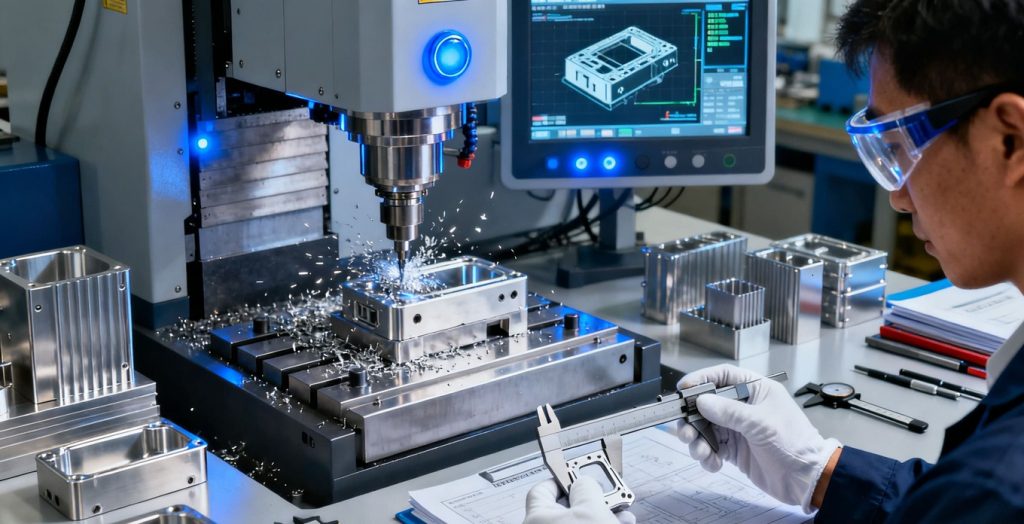
- Processes Needed: Will your enclosure require sheet metal fabrication, CNC machining, die casting, plastic injection molding, or a combination? Does it need silkscreening, powder coating, anodizing, or ESD-safe finishes?
- Volumes & Timeline: Be honest about your forecasts. Are you looking for 500 prototype units or 50,000 for mass production? Realistic volumes align you with the right factory tier.
- Quality Standards: Define your critical-to-quality dimensions (CTQs). What tolerances are non-negotiable? Do you need ISO 9001 certification? Will you require third-party inspections (e.g., SGS, Bureau Veritas)?
Phase 2: The Search – Casting a Strategic Net
With your specs in hand, you can now search intelligently.
- Leverage Advanced B2B Platforms (But Wisely):
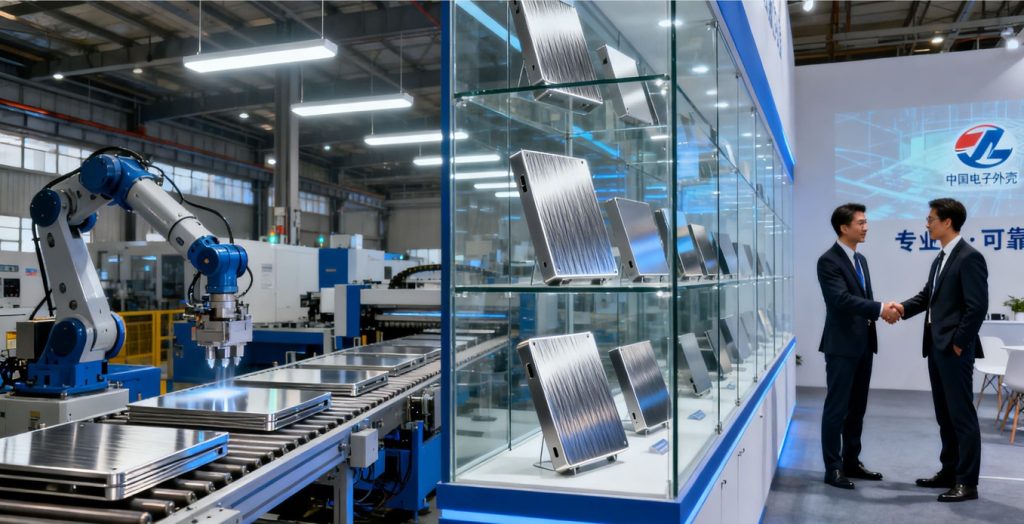
- Alibaba & Made-in-China: Use them as discovery tools, not decision-makers. Filter by “Assessed Supplier” (Gold, Onsite Check), “Trade Assurance,” and those who list relevant certifications. Scrutinize their listed factory photos and equipment (look for laser cutters, CNC punch presses, powder coating lines).
- Industry-Specific Directories: Platforms like Global Sources often feature more established exporters. For highly technical enclosures, look at trade association directories.
- The Power of Precision Sourcing:
- Keyword Mastery: Don’t just search “electronic enclosure manufacturer.” Be specific: “aluminum die cast enclosure manufacturer,” “custom sheet metal enclosure IPC,” “small batch plastic injection molding enclosure,” “waterproof RJ45 enclosure factory.”
- Reverse Image Search: Have an enclosure you like? Use Google Reverse Image Search or TinEye. You might find the actual OEM or a manufacturer producing a similar style.
- Engage Professional Sourcing Agents or Firms:
- For complex projects or if your bandwidth is limited, a reputable sourcing agent based in key industrial regions (Dongguan, Shenzhen, Suzhou) can be invaluable. They have pre-vetted networks, conduct factory audits, and handle negotiation and QC. Their fee is often saved in avoiding costly mistakes.
Phase 3: Vetting & Due Diligence – Separating Promise from Proof
This is the most critical phase. Assume nothing, verify everything.
- Initial Communication & RFQ:
- Send a detailed Request for Quotation (RFQ) package with your drawings, specs, and target price/volume. A quality manufacturer will ask intelligent, clarifying questions about tolerances, finishes, and usage—not just reply with a bare price.
- The Virtual Factory Tour:
- Request a Video Call: Insist on a live video tour of the production floor. Don’t accept pre-recorded marketing videos. Ask them to walk you through the process for a part similar to yours. Look for organization, modern equipment, and in-house capabilities (a factory that only does one step will have coordination headaches).
- Ask for Client References & Portfolios: Request examples of past work for companies in your region or industry. A confident manufacturer will provide these (with client permission).
- Deep Dive into Critical Questions:
- “Can you explain your quality control process at each production stage?” (Look for specific answers: First Article Inspection, In-Process QC, Final Random Inspection).
- “What is your engineering support like? Can you help with Design for Manufacturability (DFM) feedback?” A partner will optimize your design to reduce cost and improve reliability.
- “What is your standard lead time for prototyping and production? How do you handle logistics and export documentation?”
- “What happens if a production batch fails my QC inspection?” Clear terms for rework or compensation are essential.
Phase 4: The Ordering Pathway – Start Small, Scale Smart
Never place a large production order on a first engagement.
- Prototype Order: Pay for 3-5 sample units. This tests their craftsmanship, communication, and adherence to spec.
- Pilot Production Run: Before committing to 10,000 units, order a batch of 100-500. This tests their production line consistency, quality systems, and packaging/shipping processes. This is the stage where you or your inspector MUST conduct a pre-shipment inspection.
- Full Production & Ongoing Partnership: After successful pilot runs, you can scale with confidence. Maintain regular communication and schedule periodic audits even with a trusted partner.
Red Flags to Avoid
- Too good to be true pricing: The lowest quote often cuts corners on material thickness, finish quality, or QC.
- Vague or evasive communication: If they can’t answer technical questions clearly, they likely lack expertise.
- No engineering team: You want a manufacturer, not just a workshop.
- Resistance to audits or inspections: Transparency is non-negotiable.
- Pressure to pay 100% upfront: Standard terms are 30-50% deposit, balance before shipment.
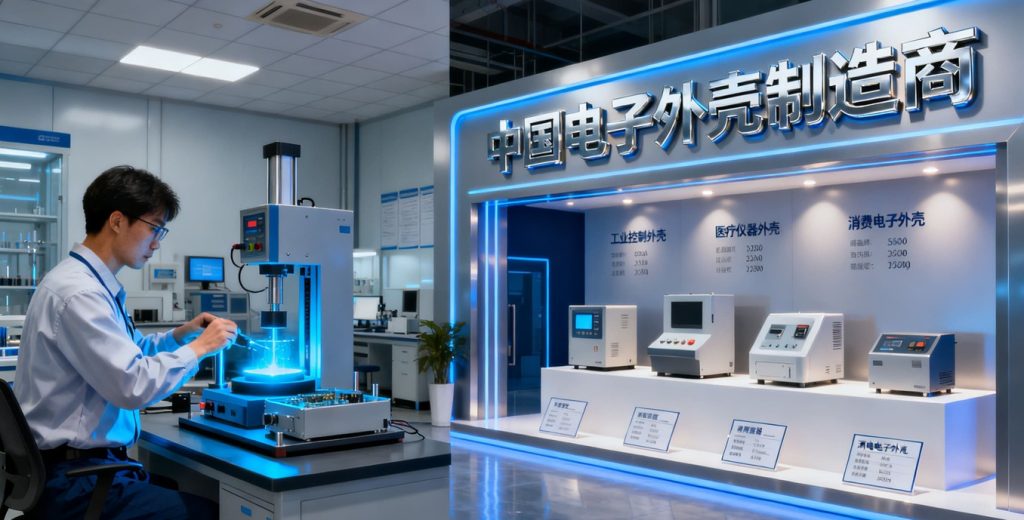
Conclusion: It’s a Partnership, Not a Purchase
Finding the right electronic enclosure manufacturer in China is a journey of meticulous research and relationship building. The goal is not to find the cheapest supplier, but the most capable, reliable, and communicative partner who can become an extension of your engineering team.
By investing time in the front-end process—defining your needs, conducting thorough due diligence, and starting with small, verified steps—you transform a complex sourcing challenge into a strategic advantage. Your enclosure is the first thing your customer touches and the last line of defense for your electronics. Choosing the right partner to build it is one of the most impactful decisions you’ll make for your product’s success.