Plastic molds are the unsung heroes of modern manufacturing. These precision tools shape the plastic products we rely on daily—from smartphone casings and car dashboards to snack packaging and industrial machinery components. As technology advances, the world of plastic molds continues to evolve, with specialized designs tailored to meet the unique needs of diverse industries. Whether you’re a seasoned manufacturer looking to expand production capabilities or a newcomer exploring plastic fabrication options, understanding different types of plastic molds is critical for making informed decisions that align with your project goals.
In today’s competitive market, choosing the right plastic mold can mean the difference between producing high-quality, cost-effective products and delivering items that fail to meet customer expectations. Most electronic devices, industrial equipment, consumer goods, and medical tools depend on custom plastic housings—each with distinct shapes, structures, and size requirements. So how do manufacturers efficiently and consistently produce these varied products? The answer lies in selecting the right type of plastic mold for the job. This guide breaks down the most common types of plastic molds, their key characteristics, applications, benefits, and considerations to help you find the perfect solution for your production needs.
What Are Plastic Molds, and Why Do They Matter?
Let’s start with the basics: A plastic mold is a tool used to shape molten plastic into a desired form. The process typically involves heating plastic resin to a liquid state (called the “melting point”—which varies by material, e.g., 105°C for polypropylene (PP) and 220°C for ABS), forcing it into the mold cavity, and allowing it to cool and solidify. Once set, the mold opens, and the finished part is ejected. This seemingly simple process relies on extreme precision: even a 0.01mm flaw in the mold can cause loose-fitting parts, leaky containers, or material waste.
Plastic molds are essential for scaling production. Unlike manual shaping methods (e.g., hand-casting), molding lets manufacturers produce hundreds, thousands, or even millions of identical parts quickly, with lower per-unit costs. Additionally, modern plastic molds accommodate complex designs (e.g., snap-fit closures, internal reinforcing ribs) and a wide range of materials—from common options like impact-resistant ABS and food-safe PP to high-performance resins such as shatterproof PC and biocompatible PEEK (used in medical implants). As industries demand lighter, stronger, and more sustainable products, advanced plastic molds play an increasingly vital role. Hongfa Shunda Mould Co., Ltd. has 20 years of expertise in plastic injection molds and specialized knowledge of all types of plastic molds—read on for our breakdown:
The Most Common Types of Plastic Molds (With Applications & Benefits)
Not all plastic molds are created equal. Each type is engineered for specific production processes, materials, and product designs. Below, we explore the four main types of plastic molds, their unique traits, ideal uses, and why manufacturers choose them.
1. Plastic Injection Molds: The Workhorse of Modern Manufacturing
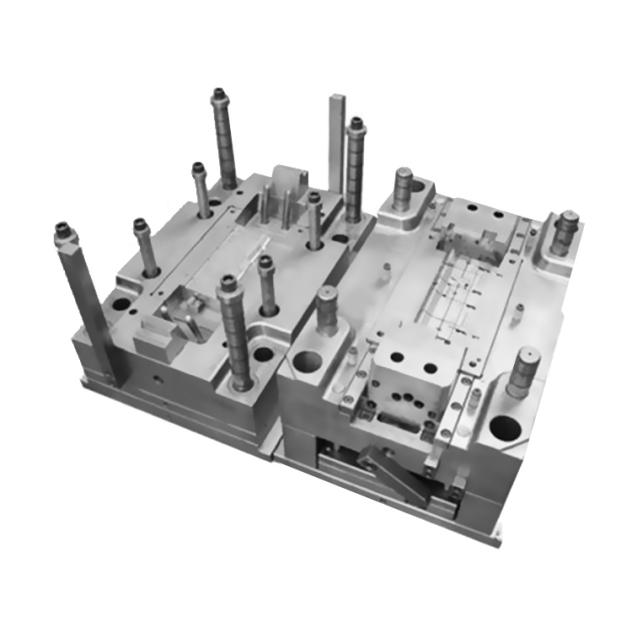
Plastic injection molds are the most widely used type in the industry. This molding process involves injecting molten plastic into a closed mold cavity under high pressure (typically 100–2000 bar, or 1450–29,000 psi), where it cools and hardens into the desired shape. Plastic injection molds are renowned for their versatility, enabling production of everything from tiny 5mm electronic connectors to large 2-meter car bumpers.
Key Characteristics of Plastic Injection Molds:
- High Productivity: Injection molding machines cycle quickly—often producing parts in 10–60 seconds per cycle—making them ideal for high-volume runs (10,000+ units).
- Precision & Consistency: These molds deliver dimensional accuracy within ±0.02mm (for small parts), ensuring every unit fits perfectly. This is critical for products requiring tight tolerances, such as medical device components or automotive sensors.
- Material Versatility: Plastic injection molds work with nearly all thermoplastics and some thermosets (e.g., epoxy). Manufacturers can add additives (e.g., UV stabilizers, flame retardants) directly to resin to enhance properties like sun resistance or fire safety.
- Cost-Effective for High Volumes: While designing and machining custom plastic injection molds has a relatively high upfront cost (typically $5,000–$50,000), per-unit costs drop to $0.10–$1.00 for large runs—making it a cost-effective choice for mass-produced goods.
Common Applications of Plastic Injection Molds:
Plastic injection molds are ubiquitous across industries. Common products include:
- Consumer electronics: Smartphone casings, laptop shells, keyboard keys, and charger components
- Automotive parts: Dashboard panels, door handles, gear shifters, and textured interior trim
- Household goods: Plastic containers, kitchen utensils, toy parts, and furniture components
- Medical devices: Syringe barrels, inhaler components, and surgical instrument housings (using medical-grade ABS)
- Industrial equipment: Gear housings, valve components, and high-strength nylon machine parts
Considerations for Plastic Injection Molds:
The main drawback of plastic injection molds is their high upfront cost—complex parts (e.g., those with undercuts or moving components) can push mold costs into six figures. For small-batch production (fewer than 10,000 units), this cost may not be justified. Additionally, plastic injection molds require specialized equipment (injection molding machines) and skilled operators to adjust pressure, temperature, and cooling time for optimal performance.
2. Extrusion Molds: For Continuous, Uniform Profiles
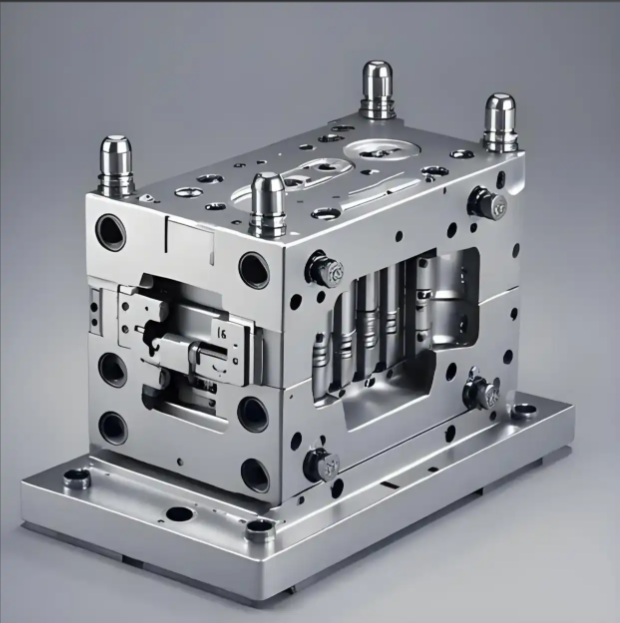
Extrusion molds (also called “dies”) are designed to produce continuous, uniform plastic profiles—think long, straight products with consistent cross-sections (e.g., a 10-foot-long 2-inch pipe). Unlike plastic injection molds (which create discrete parts), extrusion is a continuous process: Molten plastic is forced through a shaped die (the “mold” here) at 20–100 bar of pressure, then cooled (via water baths or air blowers) to form a solid profile.
Key Characteristics of Extrusion Molds:
- Continuous Production: Extrusion allows for unlimited length (or as long as equipment permits), making it perfect for pipes, cables, and weatherstripping.
- Fast Production Speed: Extrusion lines operate at 1–10 meters per minute, producing large volumes quickly (e.g., a pipe line can make 500+ meters per hour).
- Simple Design, Lower Cost: Extrusion dies have simpler designs (no moving parts or complex cavities) than plastic injection molds, costing $1,000–$10,000—far less than injection molds for similar-sized products.
- Versatile Profile Shapes: While best for uniform cross-sections, dies can create round pipes, square tubes, rectangular sheets, and custom profiles (e.g., window frames with built-in seals, embossed decorative trim).
Common Applications of Extrusion Molds:
Extrusion is widely used in construction, packaging, and industrial sectors. Typical products include:
- Construction: PVC plumbing pipes, vinyl house siding, window frames, door seals, and foam insulation strips
- Packaging: Food-wrapping plastic film, shrink wrap, and plastic bags (produced via “blown film extrusion,” where the die creates an inflated tube)
- Industrial: Plastic rods, tubes, sheets, and conveyor belt guide rails
- Consumer goods: Straws, garden hoses, and furniture plastic edging
Considerations for Extrusion Molds:
Extrusion is not suitable for complex 3D shapes or discrete parts—its strength lies in continuous profiles. While dies are cheaper than plastic injection molds, extrusion equipment (extruders, cooling systems, and product pullers) requires significant investment (often $50,000+). Additionally, extruded products may have minor surface lines or imperfections (from the die exit), which can be a drawback for high-end aesthetic applications.
3. Blow Molds: For Hollow Plastic Products
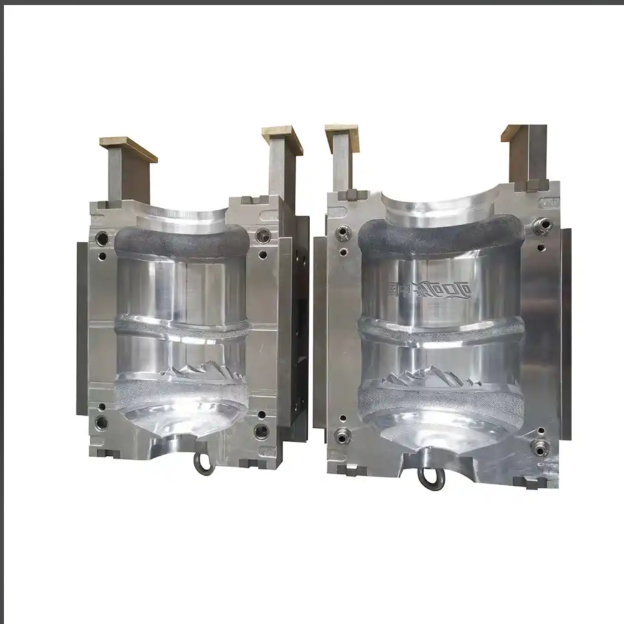
Blow molds are specialized plastic molds for creating hollow products. The process mimics glassblowing: A heated plastic tube (called a “parison”) is placed inside the mold, and compressed air (2–10 bar) is blown into the parison, forcing it to expand and conform to the mold cavity. After 10–30 seconds of cooling, the mold opens, and the hollow product is removed.
There are three main blow molding processes, each with unique mold designs:
- Extrusion Blow Molding (EBM): The most common type—parisons are extruded directly into the mold. Ideal for high-volume production of bottles, jars, and 2-liter soda containers.
- Injection Blow Molding (IBM): Parisons are first injection-molded into “preforms” (small test-tube shapes), then transferred to a blow mold. This process produces high-precision products with tight-sealing neck finishes (critical for capped bottles).
- Stretch Blow Molding (SBM): Used for PET water bottles. Preforms are stretched axially (lengthwise) and radially (outward) before blowing, resulting in stronger, lighter products with better liquid-freshness barrier properties.
Key Characteristics of Blow Molds:
- Ideal for Hollow Shapes: Blow molding is the most efficient way to produce hollow plastic products—no other process matches its speed and cost-effectiveness for this use case.
- High Production Efficiency: EBM machines can produce 100–500 bottles per minute, perfect for mass-produced consumer goods.
- Low Per-Unit Costs for High Volumes: Like plastic injection molds, blow molds have upfront costs ($2,000–$20,000) offset by low per-unit costs (e.g., $0.05 per 500ml bottle).
- Aesthetic Versatility: Blow molds create smooth-surfaced products, custom shapes (e.g., curved shampoo bottles), and embossed designs (e.g., soda bottle logos).
Common Applications of Blow Molds:
Blow molding is synonymous with packaging, but it has other uses:
- Packaging: Soda/water bottles, shampoo/detergent containers, peanut butter jars, and margarine tubs
- Automotive: High-density PE fuel tanks, air ducts, and lightweight plastic fenders
- Toys: Dolls, balls, and kid-safe hollow toy vehicles
- Industrial: 200-liter chemical drums, storage tanks, and large machinery hollow components
- Consumer goods: Foam-insulated coolers, beach balls, and flexible garden hoses
Considerations for Blow Molds:
Blow molds are limited to hollow products—they cannot produce solid parts or complex 3D shapes. Additionally, blow-molded product wall thickness may vary by 5–10% (e.g., thicker bottle bases), which can affect strength. For high-precision hollow parts (e.g., medical IV bags), IBM is preferred but has higher upfront costs than EBM.
4. Pressure Forming Molds: For Thin-Gauge, Aesthetic Parts
Pressure forming molds are used in a process similar to vacuum forming, but with added positive pressure to shape plastic. The pressure forming process:
- A thin plastic sheet (0.010–0.125 inches thick) is heated to its softening point (e.g., 150°C for ABS) until pliable.
- The sheet is clamped over the mold.
- Positive pressure (5–15 bar) pushes the sheet into the mold cavity, while vacuum suction (from mold holes) pulls it tight against the surface.
- After 5–15 seconds of cooling, the sheet is trimmed to create the final product.
Key Characteristics of Pressure Forming Molds:
- High Surface Quality: Pressure forming produces smooth, consistent surfaces (Ra 0.8–1.6 μm)—perfect for aesthetic applications like headphone casings.
- Precise Detail Replication: The combination of positive pressure and vacuum lets plastic conform closely to the mold, replicating fine textures (e.g., matte finishes), logos, and sharp edges.
- Lower Cost Than Plastic Injection Molds: Pressure forming molds are simpler and cheaper to manufacture ($1,000–$10,000) than plastic injection molds, making them ideal for small-to-medium runs (100–10,000 units).
- Suitable for Thin-Gauge Materials: Thin sheets reduce material costs (e.g., a 0.02-inch sheet uses 50% less material than a 0.04-inch injection-molded part).
Common Applications of Pressure Forming Molds:
Pressure forming is widely used in consumer goods, electronics, and retail:
- Electronics: Headphone casings, keyboard/mouse housings, and glossy/matte TV bezels
- Retail: Point-of-purchase displays, product packaging inserts, and shelf dividers
- Consumer goods: Microwave door panels (with clear windows), lipstick cases, and action figure bodies
- Medical: Glucose meter housings and sterile tool trays
- Automotive: Textured interior trim panels and dashboard inserts
Considerations for Pressure Forming Molds:
Pressure forming is not suitable for thick-walled parts (over 0.125 inches) or products requiring tight tolerances (plastic injection molds are better for these). It’s also slower than injection/extrusion (1–10 parts per minute), so it’s not ideal for runs over 10,000 units. Finally, pressure-formed parts lack internal ribs, so they’re best for non-load-bearing applications.
How to Choose the Right Plastic Mold for Your Project
With so many plastic mold types available, selection can be overwhelming. Here are the key factors to consider:
1. Product Design & Geometry
Your product’s shape and complexity will narrow options:
- Hollow products (bottles, tanks): Choose blow molds.
- Continuous profiles (pipes, sheets): Choose extrusion molds.
- Complex 3D parts with tight tolerances (electronics, medical devices): Choose plastic injection molds.
- Thin-gauge aesthetic parts (headphones, displays): Choose pressure forming molds.
2. Production Volume
Volume directly impacts cost-effectiveness:
- High volume (10,000+ units): Plastic injection molds, blow molds, or extrusion molds (low per-unit costs).
- Medium volume (100–10,000 units): Pressure forming or small-scale plastic injection molds.
- Low volume (fewer than 100 units): Pressure forming or 3D printing (avoid high-cost plastic injection molds).
3. Material Selection
Not all processes work with all plastics:
- Thermoplastics (ABS, PP, PE): Compatible with all plastic mold types.
- Thermosets (epoxy, phenolic): Best for plastic injection molds or compression molds (not extrusion/blow molds).
- High-performance resins (PC, PEEK): Ideal for plastic injection molds (require high-temperature molds).
4. Budget & Upfront Costs
Plastic injection molds have the highest upfront costs, followed by blow molds, extrusion dies, and pressure forming molds. For limited budgets, pressure forming or extrusion is better for small-to-medium runs.
5. Quality & Tolerance Requirements
- Tight tolerances (e.g., ±0.02mm for medical devices): Plastic injection molds are best.
- Aesthetic smooth surfaces: Pressure forming or plastic injection molds work well.
- Functional parts with minor deviations (±0.1mm): Extrusion or blow molds are suitable.
The Future of Plastic Molds: Innovation & Sustainability
The plastic molds industry is evolving rapidly, driven by demands for sustainability, efficiency, and advanced performance. Key trends include:
- Sustainable Materials & Processes: Manufacturers are using biodegradable plastics (PLA), recycled resins (rPET), and bio-based materials (corn-based PP). Molds are also optimized to reduce waste (e.g., thinner walls) and energy use (e.g., hot-runner plastic injection molds cut resin waste by 30–50%).
- Advanced Mold Technologies: 3D printing produces mold inserts or full molds (for small runs), cutting lead times from weeks to days. “Smart molds” with sensors monitor temperature/pressure in real time, preventing defects.
- Lightweight, High-Strength Designs: Plastic injection molds for “structural foam” parts (solid skin, foam core) reduce weight by 20–30% while maintaining strength—critical for automotive/aerospace.
- Customization & Flexibility: “Family molds” produce 2–4 part types per cycle, while interchangeable inserts let manufacturers change colors/logos without retooling entire plastic molds.
Final Recommendation: Partner With a Professional Plastic Mold Factory
Choosing the right plastic mold type is a critical decision that impacts quality, efficiency, and profitability. While this guide provides a comprehensive overview, partnering with an experienced plastic mold manufacturer ensures you select the best solution for your project. Hongfa Shunda Mould—with 20 years of expertise in plastic injection molds—can help design molds, select materials, and optimize production to meet your needs.
Whether you’re producing high-volume plastic injection parts or custom plastic enclosures, we have the right solution. Contact us today to learn more!